Saturday, January 26, 2013

STEP Day 4

You may recall that last week we didn't quite have enough time to get our final presentation completed for today, and we didn't even touch our poster board. I was crossing my fingers that we would get time before the presentations to finalize everything, and thankfully we did! I am especially glad for this because as I've said before, I really wanted this presentation to be something the students did, not me. What would be the point in me doing all the work for them? Anyway, the looming deadline of the final presentations meant that this morning we had to get down to business.

I'm proud to say that my kids really stepped up and worked their butts off to get a solid presentation put together. We finished going through the slideshow as a group to make sure the hypothesis was clear, the data analyzed, and conclusions fair. We also made sure the presentation directly addressed the criteria required for the STEP conference. After doing a couple practice runs of the presentation to help calm nerves, we had enough time to throw together a quick n' dirty posterboard - really, we just printed out the presentation and taped the slides to the board. But, it actually came out pretty well!

Not bad.... Got a nice consistent color scheme going....
We then made our way over to the venue for the final presentations, and I could tell my students were nervous. I did my best to help them relax, and gave them my best presentation tips and tricks. But I'll admit, I was rather nervous too - especially because I had no idea what to expect. I did not know who would be there. I did not know how many other groups there were, or what their projects were. I was really going into this blind. But I did know that we had a solid project, with good scientific data and an interesting story to tell. And most of all, it was theirs - and I made sure to let them know how proud I was of them for that.

We were first to arrive, and A/V was still getting set up. Nothing like a large empty room with frantic people milling about to calm your nerves, right? Anyway, other groups began to arrive and slowly the room filled with students, educators, STEP program administrators, parents, and colleagues. I know I said before that there were 5 activities going on across campus, but it turns out that due to someone dropping out there were actually only 4 (including us). The other projects related to chemistry, nanotechnology (sort of?), and art technology (sort of?). I say "sort of", because the nanotechnology group actually developed an app that was intended to educate people about nanotechnology; and the art group put together "wearable technology", which really meant they strung together LEDs with conductive thread and sewed them into shirts and hats, and programmed them to blink. I'm not sure what to call these, and I don't recall the titles they gave their projects.
ImSci participants presenting some data to a full house of spectators.
Without getting into too much detail about each presentation, I can at least say I am proud of how my students performed. They were still understandably nervous, but they did a great job. Each of them successfully presented a balanced amount of information (not all of the groups achieved that), and they demonstrated good scientific understanding. They showed pride in their work (and relief that they were done). It was not the most dynamic presentation, but IMHO it was the most thorough and appropriate for the program requirements, and deserves extra recognition because they designed and carried out the experiment themselves. Okay, so they phoned it in on the poster board - but some of the other groups didn't even have poster boards at all. Overall, I am very pleased with how our presentation went. You can view the slides from the presentation here.

Way to go, team!
It was interesting to see the other groups and compare their experiences to ours. Some of the other groups had a lot more students; some of the attitudes and levels of enthusiasm varied; and the amount of faculty oversight varied greatly from group to group. For example, the chemistry project basically involved giving the students a "recipe" of lab activities to carry out, and they did them and then created a presentation about it. In contrast, the nano group had a lot more freedom to make design choices, and (presumably) carried out their own research into nanotechnology; but, they didn't actually develop the app themselves, rather they used a tool that builds game apps for you, you just put in the relevant information. And the art tech group did arts and crafts. I could tell that my students were frustrated by this - they did research, they developed and carried out their own experiment, they discovered real findings. Why couldn't they just carry out someone else's instructions, or draw digital cartoons, or thread together blinky LEDs? But for how frustrated they were, it became apparent that they also took pride in what they did. Okay, so maybe they quietly called other projects "ugly" or "lame" or "boring", which isn't the most constructive or positive reaction; but they also began defending the hard work they did, and even said they were glad they were in this activity. Through gaining this perspective it made them realize how much they truly accomplished. It made me glad that I challenged them, and proud that they stepped up to it.

At the conclusion of the presentations, we all enjoyed lunch together. It was fun to get to kick back with my students and connect with them on a more social level. I even got to meet some family, who were so appreciative for the opportunity we provided their sons/daughters/grandkids. It made me rather sad that, now after spending 4 Saturdays together, we finally get to connect, only in time to say goodbye. And, the students finally had a wider frame of reference regarding the work they were doing. I wonder how different the past few weeks might have been if we had started off on this foot? We still couldn't totally relax yet, though, because there was still that one pesky detail that I've felt uncertain about all along: the competition to go to Albany for the state STEP conference.

Since there were only 4 activities, two groups were going to be given the opportunity to go to Albany and compete on the state level. Now that I knew who our competition was, I really couldn't predict who would make the cut. I could think of praise and criticisms for each group. I thought for sure, though, that my kids deserved to go (and I'm not just saying that because I'm competitive). But in the end, the committee chose the nano app and the wearable technology. I have really strong feelings about this selection, but I'm not going to get too far into it here. Suffice it to say, I am upset - not because my group "lost", but because I disagree with the whole competition to begin with. At the height of their pride and sense of accomplishment, half of the participants were crushed by disappointment and a sense of losing. I don't think that this conclusion to their experience sends the right message, especially considering the projects that were selected (sorry, I mean no offense to the facilitators and students who participated in those projects - but what's the experiment? How do you write an abstract about that? What exactly are your methods, procedures, data, results, and findings? Just what happened to all the program requirements we were supposed to follow...?). Sorry, I don't mean to show an ugly sour loser face, which I'm afraid I'm doing here. But even if we had been chosen, I would still disagree with introducing competition to this experience. As much as I'm not a fan of "everybody gets a trophy!", I just don't think any of the kids who participated in any of the activities should be left with any feeling of discouragement, especially when it comes to STEM subjects where it's so difficult to get kids engaged to begin with. All of these kids should feel some sort of validation for all the effort they put forth. Not that I have a suggestion for a better alternative off the top of my head... but having tried it, I don't think I would want to do a competition such as this again (and not just because I lost - really).

Okay, so there was some symbol of accomplishment and validation: at the conclusion of the event we were all presented with certificates. Mine was a "Recognition of Teaching Excellence", awarded to "Professor" Bethany Choate - hey, I'm moving up in the world! - for successful completion of the workshop.

Awk.
This piece of paper makes a nice little document to hang on my cork board and put in my performance appraisal, but I'm not sure how much it realistically means to the students. Does it really make up for their disappointment? Would they do it all again? I can only hope that they still feel the sense of achievement I think they deserve to. At the end of the day, if they walk away feeling pride and accomplishment, then I can truly accept my certificate of successful completion.

Tuesday, January 22, 2013

Texas Roadhouse ≠ Roadhouse Grill... but the rolls are good anyways.

Last night Joe, Maria, and I took out a group of third year students to the new Texas Roadhouse restaurant. I don't really have a whole lot to say about it, but in the interest of documenting all the awesome things we get to do with our students, I figured I'd put an obligatory posting here. Plus, perhaps I can make it known that Texas Roadhouse is NOT a good place to go with a group of people. Reason A: They do not take reservations. Caveat: you can call ahead to let them know you're coming so that you can wait less time once you get there. Counter-caveat: they do not accept call ahead's for parties bigger than 7 people. (Does that seem to defeat much of the point to anyone else?) Now, Reason B: They do not have seating to accommodate groups larger than 6 adults. And 6 is even pushing it. In fact, judging by most of the clientele there, the limit in those booths is really more like 4. (Excuse the remark, I'm simply making observations...). We were lucky enough to get two booths, but they were back-to-back rather than side-by-side, so we might as well have been 2 separate groups. And of course all the students sat together while all the adults sat together. Once the other adults left and I began talking to the students in the booth behind me, we got a lot of weird looks from the people all around us... they probably had no idea that we were actually one big group and thought it was super weird that I was being so friendly with a bunch of kids. Oh well, feel free to judge me for that so long as I can openly judge you for willingly sitting on the (what must be disgusting) roll-around saddle while wearing a silly hat because it's your birthday.

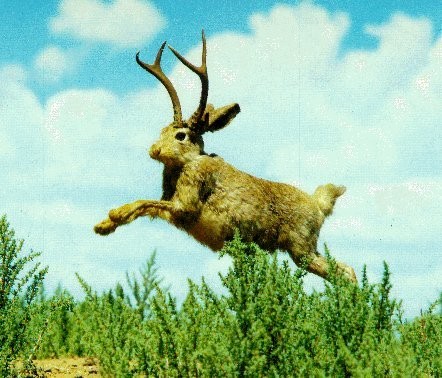
Anyways, they had a jackalope there, so that was pretty silly.
The rolls were good, but other than that we were not too impressed. But the opportunity to spend some off-the-clock time with students is always worth it! And, jackalope. The end.

Saturday, January 19, 2013

STEP day 3

Today's session, being the last full Saturday workshop, was devoted to data analysis and preparation for our presentation next week. I actually put together the skeleton of the presentation ahead of time, but really just to facilitate the analysis itself - see, all I did was assemble the sets of images captured last week onto slides, plus a title slide.  No labels, no data, nothing. And as far as I'm concerned, that's the end of my hands-on involvement in the presentation; I really want this to be something by the kids that they can own and know they accomplished themselves.

Anyways, we got started by me bringing up the first data set on the projector and asking, "So, what do you see?" I was met with the standard fare: silence. You'd think I'd be used to this by now. I let the silence soak in for a bit, intending that to be a hint that the data was not going to analyze itself, but using that approach we were getting nowhere fast. So I decided to try bargaining: I'll lead through the analysis of this first one, and then you take it from there. Okay, sure.

So I start out with the basics: At time T0, what's the temperature of the ungloved hand? What's the temperature of the gloved hand? Now let's do the same for T5.... and T10... and then T10 immediately after removing the glove. And now that we have these numbers, what does that tell you about the glove? How well do you think it worked? How do the two hands compare to each other at the end, and versus the start? And so on... Seems pretty straightforward, just work though making observations step-by-step. Right? So we get to the second data set, and I say, "Now take me through this." And we're back to silence. Sigh. I know they can do this! So I ask one of the students to take the rest of us through it. And they squirm with discomfort, and don't want to do it, but eventually they suck it up and take the lead. And for the next data set, another student leads us through. And we slowly make progress from there, with me occasionally stepping in where needed to keep things moving. Then it came time to see the bigger picture and come up with some overall conclusions, which apparently also required my intervention - So what was the most effective? Okay, why? How would you rank the different insulators? What did you observe about the effect of the material composition on its ability to insulate? (Okay, that one was a little advanced. But not beyond what I think these students are capable of...)

All of this seems pretty basic, but these kids don't seem to know to even ask these questions to generate these answers. Which really makes me a bit concerned, and overall skeptical of our education system. Has science really come down to this? Do lab reports really just consist of recipes to follow and blanks to fill in? Are conclusions just made based on leading questions? Don't students have to write actual lab reports anymore??!? But I guess I shouldn't be so surprised. I see this with the lab reports submitted as parts of intern application packages. And even when I was in high school, I could see that science labs were becoming a joke. But why? And why does this seem to get by as okay? Why are students only held to such low science standards? But I digress...

After a short break (since we were already more than half way through our day by this point), I tasked the kids with outlining their presentation and what should go into it. I had written the components of the abstract again during the break for reference (and as a hint as to what types of things should go into the presentation). Whiteboard marker in hand, I asked, "So, what sections do you want to include in you presentation?" As you probably have guessed, I was met with blank stares. "Okay, so I'll give you a hint, because I've already done it for you. We'll start with a title slide. So.... now what?" They started to get the idea, and we eventually developed a thorough outline. From there it came time to actually produce the slides, so I asked who wanted to do what. You got it - silence. Finally one of the students asked if she could do the first section. Fabulous - it's hers. One of the other students got the idea, and asked for a section. Done. As for the rest, I practically had to assign them - as if not volunteering for one was going to let you not do one at all? It's like some of these kids hope that by doing nothing, someone else will finally step up to get the job done for them, and they operate by putting in the least possible effort that's just barely enough to get by. Sigh. Are all of the workshops like this? Is this just how students are, now?

After drafting out their slides individually, the kids worked on the computers in pairs to put together their respective slides. This mostly went well, though I had to occasionally interfere when one student decided he'd rather criticize his partner's grammar and spelling than actually help her through getting it done. And I mean, this was going beyond what was in the slide and was getting quite offensive. I had to ask, "Is that constructive criticism? Or are you just being counterproductive?" Disappointingly, this was one of the older students. What grade am I working with here, again? Sheesh. These are the kinds of situations that I feel especially unprepared for. I don't usually have to deal with disruptive behavior or acting like a parent; I don't know how to do that...


Once everyone was done, we regrouped and started going through the slides to make edits as a team. We didn't get too far though before it was time to break for lunch, so we'll have to hope that we have enough time next week before the presentations to clean everything up. And as for the poster board we are also supposed to make... it is sitting in my office, still in its wrapping. Oops!

I told the kids as they left that they did a really great job today, and despite how critical or disappointed I may sound here on my blog I was not being facetious. We really did have to go through a lot of data and work, and I think their efforts are going to show when they do their presentation next week. Although sometimes it feels like I'm pulling teeth to get them to step up, I think in the end we are going to have something we can all feel proud of. I think I'll be glad I approached things the way I did and didn't give in to taking an easy way out or doing it all myself, no matter how exhausting it feels right now. And I hope I'm helping to fill that void that I so frustratingly feel school science curricula have. Hopefully the kids will look back on all this and feel similarly, too... Though I suspect I wouldn't have at their age, and probably wouldn't recognize the value of these experiences until many years later when I'd have more perspective. (Does this mean I'm getting old? Yeah, I think it does.)

Thursday, January 17, 2013

Imaging Hall of Fame 2012

Last night was the 7th annual Imaging Hall of Fame! Now, we couldn't just let this year's event be the same as last year's, so we planned for a couple little special extras. For the first time ever, of of the current honorees was actually present for his induction! And then to take things even one step further, we also decided to honor Dr. Schott for all his years of dedication to CIS - but NOT as a retirement celebration, no sir re bob... (Despite the communication that went out that did indicate it as such. WHOOPS) (Not my fault) Anyways, following the usual ceremony for this year's inductees (Harold E. “Doc” Edgerton, David E. Kuhl, Joseph Nicéphore Niépce, and Steven J. Sasson - click for more info), Dr. Schott was presented with a non-Hall of Fame, but similar, plaque in his own likeness...


After which, special guest (how many special guests are we up to now?) Steve Schultz (VP and CTO of Pictometry) (and former boss of mine!) said a few words...

"Schott: 'Imagine my hair as a black body radiator.'
'Don't you mean a white body radiator?' And that cost me a letter grade." - Steve Schultz
And then we got to the actual keynote speaker, special guest Dr. Ray Jayawardhana...
ALIENS
At this point I actually had to duck out to get to the after party and set up, but Joe stayed behind to snap a few pics of our VIP inductee, Steve Sasson.

Imaging Science 3rd year student Kevin Dickey presents 2012 inductee Steve Sasson with a souvenir plaque in his honor, identical to the one to be hung in the Hall of Fame.
PS: Kevin also got Steve's autograph. Awesome
Congratulations, Steve!!!
Following the ceremony, (and ceremony, and recognition, and keynote,) was the afterparty at TC Riley's! Similar to 2010, when we hosted the very first Hall of Fame afterparty, we reserved TC's Library and stuffed ourselves silly on deliciously greasy finger foods.

This is the only picture I've got of the reception, and I didn't even take it. My camera is out for repair :-( and the backup I was using took pictures so terribly in such low light that I didn't even try.
This year we had our highest turnout EVER, with around 55 CIS students, faculty, staff, alumni, and several VIPs!! It was really exciting to see so many people come out, especially the various VIPs, which included Catherine Carlson, former director Ed Przybylowicz and his wife, Steve Schultz and family, Steve Sasson and his wife, Dr. Schott and his wife, and our keynote speaker Dr. Ray. The party stayed strong for around 3 hours (!) and went incredibly smoothly (well done, TC's!).

Considering how seemingly successful the night was overall, I hope everyone will now plan to make an annual tradition of attending! Or maybe we just peaked by having so many excellent special recognitions and talks all at once. How can we possibly top this next year?!

To see more pictures (except for the afterparty, SORRY), click here. Video of the ceremony and keynote also available.)

Wednesday, January 16, 2013

451ºF

Just about a month ago I teased a new undergraduate information digital booklet - and I am proud to announce it is now available!

This booklet is pretty much a total revamp and update of the previous printed booklet, which is particularly out of date now that we'll be changing to semesters. This time, we plan on only having a digital version, and do not plan on producing printed booklets at all. It is simply not worth the cost - booklets are extremely expensive to produce, and many of them just end up in the garbage (or, hopefully, recycling bins) anyways. Plus, now when we need to update the information, all we need to do is change out a digital slide; gone are the days where hundreds of booklets become kindling because they are out of date practically as soon as they are printed.

It's probably not possible to get away from physical promotional materials entirely - everybody likes to have a takeaway of some sort - so I'm still hard at work at an undergraduate information brochure that then directs readers to the online slideshow for detailed information. This should be incredibly less wasteful and significantly less expensive than the booklets. Stay tuned for this release, though it may still be a while.

Meanwhile, I had to tinker around with a number of different viewer codes in order to create a simple slideshow display for the booklet. Hopefully the fruits of my labor give the booklet a little extra pizzazz beyond simply scrolling through a PDF. But, the PDF is still there just in case the slideshow doesn't work.

Enjoy!


Saturday, January 12, 2013

STEP day 2

Today for a little while we had a special guest: Joe! Joe happened to be around in preparation for a meeting a little later in the morning, so he stopped by to help out a bit and see how the workshop was going. He pretended to have no idea what we were doing and asked the kids to go over what we talked about last week. Cricket chirp... So then he asked, "Okay, well you talked about what Imaging Science is, right? Can anyone tell me what Imaging Science is?" More silence... "...Well, it's like photography, right? Imaging Science is just like photography?" And then half the kids start nodding in agreement... *facepalm. 

Moving along, we hand held the kids through a discussion about what we did last week, which then transitioned into what needed to be done next. The first thing I had planned for today was to complete the information required for the project abstract (due Monday). One of the requirements is a page of references, so to help things along and get the juices flowing I prepared three references ahead of time: An Introduction to Thermal ImagingHow Space Blankets Work, and Thermal Imaging to Assess the Insulation Properties of an Incubator Cover by Macnab, A. et al. (accessed via RIT Library database, so I don't have a link, sorry). I thought these were great references because they represent three different types of sources: a blog; a popular internet reference; and a scientific journal. They also covered a range of applicable topics, and some even included practical information for carrying out data collection. So through this I hoped the kids would learn not only about thermal properties and thermal imaging, but also how to read scientific articles and perform useful research. 

I paired up the kids by pairing the older students with the younger ones, and then since only 5 of my 7 kids showed up Joe was paired with the odd one out. Each pairing was then given one of the three articles I had brought with 15 minutes to read and discuss between them. Then they were to present on their article to the rest of the group. This went.... okay. It was clear that pretty much all of these students were very shy and uncomfortable about getting up and talking in front of each other. They spoke very quietly and were not confident about what they were saying... which is really a shame because what they were saying was actually very insightful and spot on. Joe and I asked leading questions to cover the points they might have missed, and overall it seemed they had picked up on mostly everything I had hoped they would. 

At this point Joe had to leave, so we bid him goodbye as we transitioned into completing the rest of the abstract information. This time I split the group in two: a problem statement group and a methods group. The problem statement group was charged with addressing why this is a relevant research project, what scientific gap the research is filling, and what questions are being addressed in the project. The methods group was charged with creating a list of all of the insulators we had all brought today, and taking notes on what materials they were made up of. After about half an hour, we regrouped to assemble everything into the abstract and determine together what steps we would take to collect data.


Once that was all determined, we were off to the ice rink to collect data! (Because, of course, since we wanted to utilize the cold winter weather, mother nature decided it would be over 50º today.) We claimed a space in an upper corner of the rink and commenced with data collection with the portable IR camera. The figure skating club was holding a practice during this time, so we were entertained during the 5 minutes we waited between each picture, though it got a little distracting when it came time to do actual work. For the different insulators, we collected images for initial - no insulation, initial - insulated, at 5 minute intervals, and then a final uninsulated picture. We did this for a bunch of different materials, but my favorite is a space blanket:

Wool knit blanket on the left, space blanket on the right
You can essentially "see" a hood through the blanket. You can also see where heat is reflecting off the space blanket.
After 10 minutes, you can see how the wool blanket has heated up, but the space blanket looks pretty much identical.

Overall I am not certain of the validity of most of the data... The kids kept running down to the vending machines in the warm lobby to get snacks, or would forget and take off the insulator they were wearing, or would unfold their blanket and change their configuration, among other things... not to mention no one was keeping accurate 5 minute timing. Sigh. But even those kinds of mistakes are useful and important lessons that we'll be able to discuss next week.

After we were finished collecting data, we returned to the Reading Room to do a little more research and come up with the rest of our references. The kids were paired up and used the computers to do searches for relevant information. There wasn't a whole lot to be found, unfortunately, but the kids at least got a taste of how to perform scientific research before calling it a day.

I'm still not totally sure how I feel about this. I feel incredibly exhausted and it seems like no matter what I try, I can't get these kids very interested. I question whether I'm really any good at this and whether I'm cut out to handle a tough audience. I pour my heart into creating a fun, interesting, and educational experience but I can't seem to connect. I thought they would have a lot of fun collecting data with the camera, but it felt more like a chore. The times I gave them independent work to do it was more like I was burdening them than giving them an opportunity. Hopefully I'm just misreading them and being hard on myself... But I was really hoping the data collection with the camera this week would be a highlight, and right now I'm not feeling the excitement. :-(

Meanwhile, foot-in-mouth moment of the day: After the kids were supposed to have left, I was returning a bunch of the supplies to my office when I ran into a current undergrad student on the stairs. She asked what the group of kids was about, and we got into a little discussion where I related that most of the kids were there because their parents made them; I quietly admitted, "It's not very fun to spend my Saturday morning with a bunch of kids that really don't want to spend theirs with me." And then suddenly above us on the stairs was one of the kids, wandering around because he had left his gloves in the Reading Room (even though I asked multiple times, "Has everyone got everything?") and couldn't get back in because it was locked. I don't know if he heard what I said, because I was being quiet (believe it or not - and not just "Bethany quiet", but actually quiet), but part of me actually wishes he did hear me. I think sometimes it's easy to forget that I'm giving up my Saturday, too (and Friday night, for that matter). Although I don't want the kids to know that I'm struggling, such awareness might help to make me look a little more human... 

Friday, January 11, 2013

A second chance

Today I met with a current RIT student who actually visited CIS almost exactly one year ago thanks to a pretty random sequence of events. When my brother's health was declining, one of the visiting nurses and I struck up a conversation about what I do for work; I don't remember why. She mentioned that her son was interested in engineering at RIT but wasn't really sure what he wanted to do. I gave her my card, sent her son a folder of information, and scheduled a visit for them to CIS. Unfortunately the timing worked out such that I couldn't be there, but thankfully Joe was able to accommodate. The (prospective at the time) student sat in on the freshmen class and fit in very well. Joe was really impressed with how well he fit in and thought he would be a great asset to the program. Unfortunately, we didn't see him in the class roster in the fall.

Fast forward to this week. I heard again from the student's mother, who said he was at RIT in an undeclared major and was very unhappy. He was feeling pressure to declare a major, did not enjoy the classes he was in, and was thinking of leaving RIT altogether. I was very distressed to hear this - no student should have such a horrible experience in college. She asked if I would be willing to meet with her son, and my answer was, of course! I also set it up so that he could speak with Sue, because while I excel at talking all things Imaging Science, Sue is the wise master when it comes to figuring out what you want to do and what the best path to take to get there is.

It was an absolute pleasure to meet with this student (too bad I wasn't able to meet with him the first time around)! He was personable, intelligent, and outgoing - an all around fantastic student. He had experience working in groups, and exhibited natural leadership abilities (wish we had him in the freshmen class already....). His interests even sounded like they aligned very well with Imaging Science, though he wasn't sure about the level of math that would be involved. We chatted for a surprisingly long time, after which I dropped him off with Sue. Turns out they talked for a long time, too, because it was about an hour before he stopped by to say goodbye and to thank me again for meeting with him.

Whether or not this student ultimately decides to choose Imaging Science, I hope we helped him to explore his options and not feel so boxed in in his current situation. Ultimately, our true goal is to make sure that every student enjoys their experience at RIT - and I think our conversations today really made a positive difference.

Saturday, January 5, 2013

STEP Day 1

Today I embarked on a new adventure I have not participated in before: The Science and Technology Entry Program (STEP). Per the RIT K-12 website,

The RIT Science and Technology Entry Program, or STEP, is a state-funded grant program that provides academic enrichment and college and career exploration to students in grades 7 - 12. http://www.highered.nysed.gov/kiap/step/ 
Through activities such as hands-on workshops, tutoring, mentoring, college & career exploration, field trips, summer camps, and leadership training, STEP exposes students to a variety of careers in science, technology, math, health- related fields, and licensed professions. 
Currently, the RIT STEP program serves selected schools within the Rochester City School District, Rush-Henrietta School District, and Greece Olympia.

My involvement with this program is facilitating an Imaging Science workshop each Saturday in January. A group of 7 students raging from grades 9-11 spend 3.5 hours with me each Saturday morning for the next 4 weeks. While Joe has participated in something similar to this before, this particular format is a first for me. One aspect that is new to either of us is the competitive element: of the 5 workshops being offered campus-wide, only two of them will be selected for inclusion in the STEP Annual Conference in Albany, NY. I'm not totally sure how I feel about this - I would much rather offer a variety of workshop activities without the added stress and constraints of being part of a competition - but I didn't want to be left out entirely, so I figured I would give it a shot.

My plan for a research experiment for my students to carry out and present revolved around using a thermal camera to determine insulating properties of clothing - but I was going to do as much as possible to steer them towards developing their own experiment that they could own versus me handing something down to them. Regardless, I planned for the experiment to involve thermal imaging, so I scheduled today's 2.5 hours (our meeting time was shortened this week due to a math exam) to include an introduction to imaging science, the electromagnetic spectrum, and thermal imaging. After a break, we would all read the project guidelines handed down to us by the STEP program and discuss what we would be doing for the next couple Saturdays. From there, we would develop an experiment - or, well, that was the plan, anyway.

The first thing we did was go around the room, introduce ourselves, and say why we were there. While a couple of the students said they were there because they like science, most of them said they were there because their parents made them.... Aaaaand we're off to a great start.

This is going to be a long day.
For workshops I really prefer to stay away from power point presentations in favor of more hands-on activities, but today it was inevitable in order to introduce the students to thermal imaging and lay the groundwork for our experiment. So I started off with my usual "About Me", into which I weave information about Imaging Science at RIT, but after a few minutes it seemed I was losing their attention. Even the couple of students that started out seeming pretty interested were looking bored, which was a major blow to my confidence. I sped through the rest of that part in order to get to the fun stuff with the thermal camera. After a short introduction and overview of the EM spectrum for the kids who hadn't learned about it yet, we got into the demo.... And I'm disappointed to say that I have never had a group less interested in interacting with the camera.

Zzzzzzz?
Even once I picked students to get in front of the camera, they were seemingly unamused, as were the rest of the students watching. Even the ol' mustache gag wasn't doing the trick. We dragged our heels through the rest of the demo, and that's when I knew this workshop was going to be a real challenge. Even when students don't resonate with my passionate presentations or ridiculous personality, which will go so far as to become self-deprecating at an attempt to become relatable or at least laugh-at-able, usually they open up with the thermal camera and enjoy themselves at some point. With this group.... not so much. Nothing I was doing seemed to be working. I wrapped up the presentation and excused them for a 10 minute break, which dragged into 18 minutes since a few of them apparently decided they didn't really want to come back, or at least weren't going to come back until someone told them to.

After the break, I passed out the abstract guidelines for their project. The rules outlined by the STEP program were very detailed and strict, and in some cases seemed inapplicable to the type of experiment we were going to carry out. It sounded as if we were supposed to have had 8-10 weeks of experimentation, whereas we will have 2 Saturday mornings (since the 4th Saturday is presentations). Even so, as a group we went over what we were going to have to submit next Saturday for an abstract, and from that we could develop our experiment. This too was like pulling teeth, so before too long I transitioned into brainstorming because I thought that at least would get them involved, right? Right?

Wrong.
I asked the kids what kind of experiment they wanted to do. Silence. I asked them what kinds of things they saw in the presentation I just gave. Mumbles. "Firefighters." "Doctors." "Animals." Okay... So what kind of an experiment can you draw from those examples? Silence. Well, first and foremost, what kind of category do you want your experiment to fall into? By the democratic process and a show of hands, we decided on "Human Services". So I provided context about Superstorm Sandy as an example: after the storm, many people were left homeless and without possessions, or at the very least without power. To aid in emergency relief, they were given blankets to keep warm. Can you think of anything we can do with that using a thermal camera?" Nope. *Sigh.*

This isn't to say that the kids were totally drawing a blank - they did try to come up with some ideas for an experiment. Unfortunately, most of those ideas were either outside of the scope of what we could accomplish in two Saturdays; or were not applicable to Imaging Science or thermal imaging; or were not
relevant at all (requirement #1 in the guidelines we were given). As the clock ticked down and the students just wanted to get out for lunch, they decided to just go with my idea in some way but to make it "Stocking an Emergency Preparedness Kit". We quickly listed a bunch of items we would test that we would have to bring next Saturday, and then time was up.

To be honest, I have such mixed emotions about this experience. It is really discouraging to know that I am putting my all into something that still fails to excite these kids, despite my effort. It really doesn't feel good to spend my Saturday morning with a bunch of kids who don't want to spend theirs with me. And then I feel guilty about feeling that way, because these kids probably don't have it easy to begin with and probably have to deal with people who give up on them all the time. The whole experience leaves me drained and tired and, to be honest, sad. But I'm going to hold out hope and keep trying; maybe things will turn around next week when we start to actually experiment. Either way, when it comes down to it this really isn't about me and how I feel; it's about making a worthwhile experience for these kids that hopefully they learn from and enjoy doing. And I'm still going to do all I can to give that to them.

Thursday, January 3, 2013

Summer Intern Applications Now Available!

Happy 2013! The start of a new year signals many a thing, not the least of which is the start of a new summer intern cycle, ta da! Applications for the 2013 High School Summer Intern program are now available at
Please encourage any high school juniors in your life to apply!

Has it really been 12 years? barf